
What Is Cockroach Milk? Scientists Win 2026 Ig Nobel Prize for Bizarre Discovery
Scientists studying energy-rich cockroach milk won the 2026 Ig Nobel Chemistry Prize in Zurich.
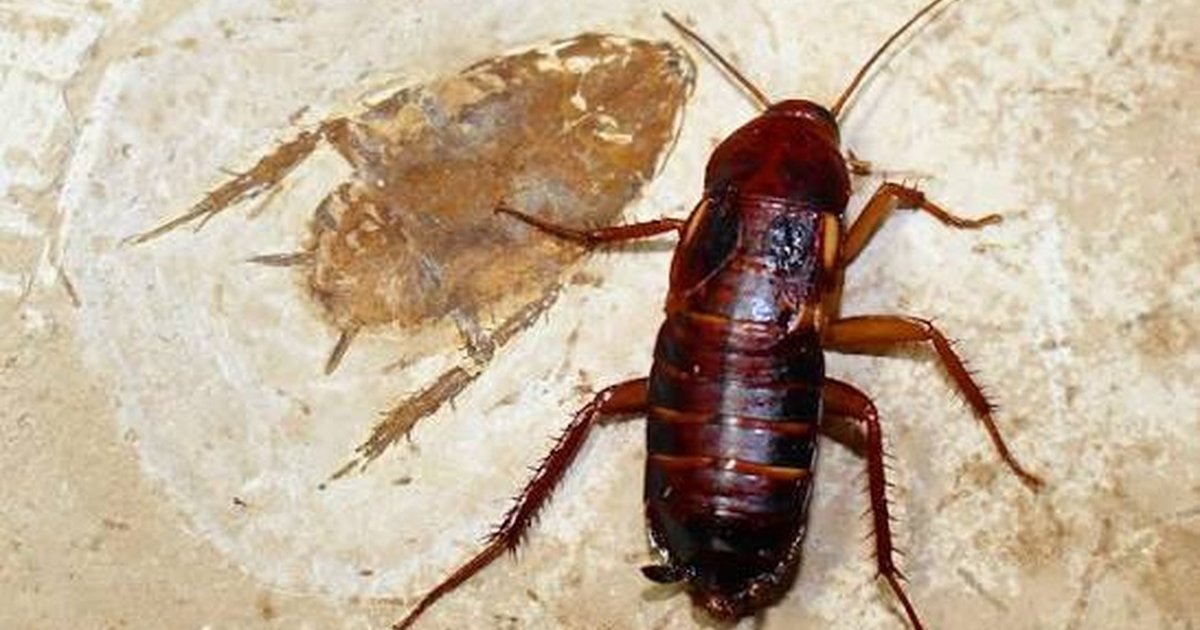
A bizarre scientific discovery about cockroach milk has officially earned one of science's strangest honors.
Researchers behind a 2016 study of energy-rich milk proteins produced by the Pacific beetle cockroach were awarded the 2026 Ig Nobel Prize in Chemistry on Thursday, Sept. 3, at a ceremony in Zurich, Switzerland.
The award recognizes research showing that milk proteins produced by the viviparous cockroach Diploptera punctata can store more than three times the energy of an equivalent mass of dairy milk.
But despite the viral appeal of "cockroach milk," scientists did not discover a new beverage for humans.
Instead, the research focused on how the unusual secretion nourishes developing cockroach embryos.
What Is Cockroach Milk?
Unlike most cockroaches, Diploptera punctata gives birth to live young.
Its developing embryos are nourished by a milk-like secretion inside the mother's brood sac.
Researchers found that the secretion is converted into protein crystals inside the embryos' midgut.
Using X-ray crystallography, the 2016 research team determined the structure of those crystals at a resolution of 1.2 angstroms.
The proteins have a lipocalin fold, bind lipids, and form a tightly packed crystalline structure that allows substantial amounts of nutrients to be stored in a very small space.
The original study estimated that a single crystal contains more than three times the energy of an equivalent mass of dairy milk.
That is not an indication of cockroach milk being three times more nutritious for humans, nor does it establish that people should consume it.
The finding describes the energy density of the cockroach's milk proteins and their role in supporting the development of embryos.
Why Did Scientists Study It?
The strange discovery questions how an animal efficiently packages enough nutrition to support rapidly developing offspring.
The researchers' work revealed an unusual natural method of nutrient storage.
The protein crystals allow the developing embryos to access a concentrated supply of nutrients while they grow inside the mother.
The 2026 Ig Nobel organizers recognized the international team behind that research, including scientists from India, France, Japan and the United States.
Among those who attended the Zurich ceremony were Leonard Chavas, Subramanian Ramaswamy and Nathan P. Coussens.
Why Is It Called an Ig Nobel?
The Ig Nobel Prizes are designed to honor research that first makes people laugh and then makes them think.
The subject, the study of the cockroach-milk, sounds absurd, but the underlying work involved sophisticated structural biology and X-ray crystallography.
The timing also gives the discovery a fresh hook.
The research dates back to 2016, but it received the Chemistry Ig Nobel nearly a decade later, after the 2026 awards ceremony on September 3.
After 35 previous ceremonies in the United States, the 36th First Annual Ig Nobel Prize ceremony was held in Zurich for the first time outside the U.S.
The organizers said the move was made amid concerns about the safety and travel of international winners.
Questions around cockroach milk" becoming the next superfood, the science so far offers no such conclusion.
The finding is not a new human food source but an unusual biological mechanism.
A cockroach produces a milk-like secretion whose proteins crystallize into an exceptionally energy-dense nutrient store for its young.
And that is precisely why a discovery that sounds like a joke has ended up being recognized by one of science's most unconventional awards.
Originally published by ibtimes.sg. Syndicated material does not necessarily reflect the views of Glamour Canada.