

Data centres are expensive. Reits are ‘powerful tools’ to raise capital – and Singapore benefits
[SINGAPORE] Data centres are expensive – to construct and to operate, as they are also power-guzzling.
Amid the AI boom, as demand from hyperscalers for computing power drive up the need for data centre capacity, those costs will stack up even more.
Global data centre capital expenditure (capex) hit US$455 billion in 2024, according to a report by Baker McKenzie on Tuesday (Dec 2), citing data from Dell’Oro Group.
“Unprecedented capex in AI infrastructure are projected to keep pace with the demand for compute power,” said the Baker McKenzie report. It added that market research suggests the future global data centre market could reach US$600 to US$700 billion by 2030, with average annual growth rate of about 11 per cent.
Data centres are projected to need a US$6.7 trillion investment globally to keep up with the compute power demand by 2030, based on data from McKinsey.
“The growth of power demand in the data centre space is much faster than the growth of total electricity consumption in other sectors…(with) many predicting at least several multiples of the current consumption in a decade,” noted the Baker McKenzie report.
With that comes “compelling opportunities” for financing and investment, the report said, as major sector players seek new ways to raise capital to support development and growth plans.
Among the options, data centre real estate investment trusts (Reit) are increasingly regarded as a strong way to raise capital for the portfolios of stabilised data centres, it said.
“Globally the data centre Reit is emerging as a powerful tool for raising capital for portfolios of stabilised data centres as it offers a blend of liquidity, scalability, and attractiveness to investors,” said the report.
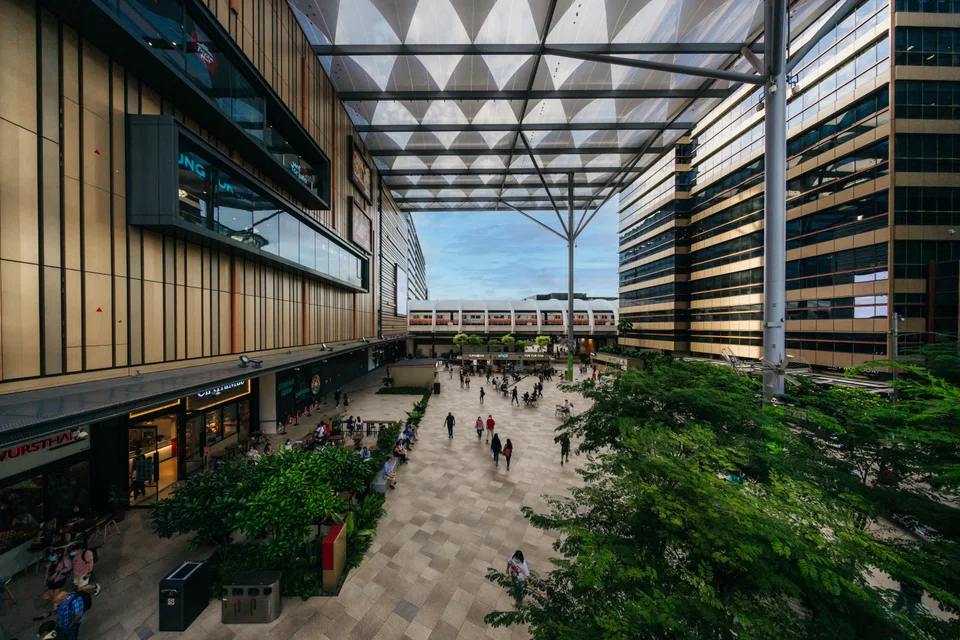
“Given the local support for AI, (Singapore is) unsurprisingly…a popular listing location for data centre Reits, having created a comparatively more flexible Reit regime.”
Baker McKenzie
Data centre Reits are where operators and developers of data centres use initial public offerings (IPOs) of the Reits, plus follow-on public offerings of debt securities or equity, to raise capital in order to support their development and operations.
“Reits offer operators a reliable exit and capital recycling mechanism, while investors gain access to a diversified, high-growth asset class,” said the report.
A Reit IPO, to Baker McKenzie partners Carol Stubblefield and Adam Farlow, can offer access to “deep capital funding sources,” lower financing costs and support long-term growth.
They explained that unlike private companies, Reits could access private markets more easily to raise a much greater amount of capital required to build data centre campuses.
This would be alluring to data centre operators, on top of how more liquidity and transparency is available, and refinancing cost benefits.
The increase in demand takes place alongside the rising value of data-centre-oriented mergers and acquisition (M&A) deals, reportedly hitting US$73 billion in 2024, on top of other strategic alternatives to raise funds with lower costs.
“Reits may use public offerings of debt securities or preferred stock to obtain a more favourable debt structure,” said Stubblefield and Farlow.
To institutional and retail investors, benefits of data centre Reits would include a steady cash revenue stream offered, and portfolio diversification.
“(These Reits), in effect, offer investors a hybrid investment approach – the ability to participate in the digital technology and economy sector while benefiting from the protection of stable, income-producing real estate assets,” the report said.
Singapore as a Reit IPO hotspot
The report highlighted Singapore as a country which draws in Reit listings, considering the city-state’s real estate-specific tax regime.
It explained that jurisdictions like that of the Republic have special regimes for Reits that encourage investment in real estate through “tax efficient entities”.
An example it gave was that tax transparency treatment may be accorded to the Singapore Reit (S-Reit) on a share of the statutory income of the trustee, subject to conditions being met.
This includes the trustee distributing a minimum of 90 per cent of its taxable income to the unitholders in the same year the income is achieved.
“Where the conditions are met, the specific income distributed to unitholders is not taxed at the S-Reit level, but in the hands of the unitholders,” noted the report.
As a data centre hub, the country has demonstrated regional strength, too, with its capacity exceeding 1.4 gigawatts and one of the highest concentrations of data centres in the world.
It has also asserted itself as a “Smart Nation” with its national AI strategy set out in 2019, the report noted.
“Given the local support for AI, (Singapore is) unsurprisingly…a popular listing location for data centre Reits, having created a comparatively more flexible Reit regime,” it stated.
S-Reits are allowed to own global assets outside of Singapore, as part of their portfolio assets. Regular contribution of new assets by sponsors is encouraged too, said the Baker McKenzie report.
“(This) suits operators and developers who have a pipeline rather than just an initial set of data centres,” it explained.
Earlier in July, the Singapore Exchange witnessed the mega listing of NTT DC Reit – its largest Reit IPO in a decade. Its market capitalisation stands at US$1 billion, and is the third pure-play data centre Reit listed in the country.
Other Reit IPOs in Singapore include Digital Core Reit, and Keppel DC Reit listed on SGX in December 2014.
Decoding Asia newsletter: your guide to navigating Asia in a new global order. Sign up here to get Decoding Asia newsletter. Delivered to your inbox. Free.