
The Supreme Court Delivers a Surprise Ruling for a Death Row Prisoner

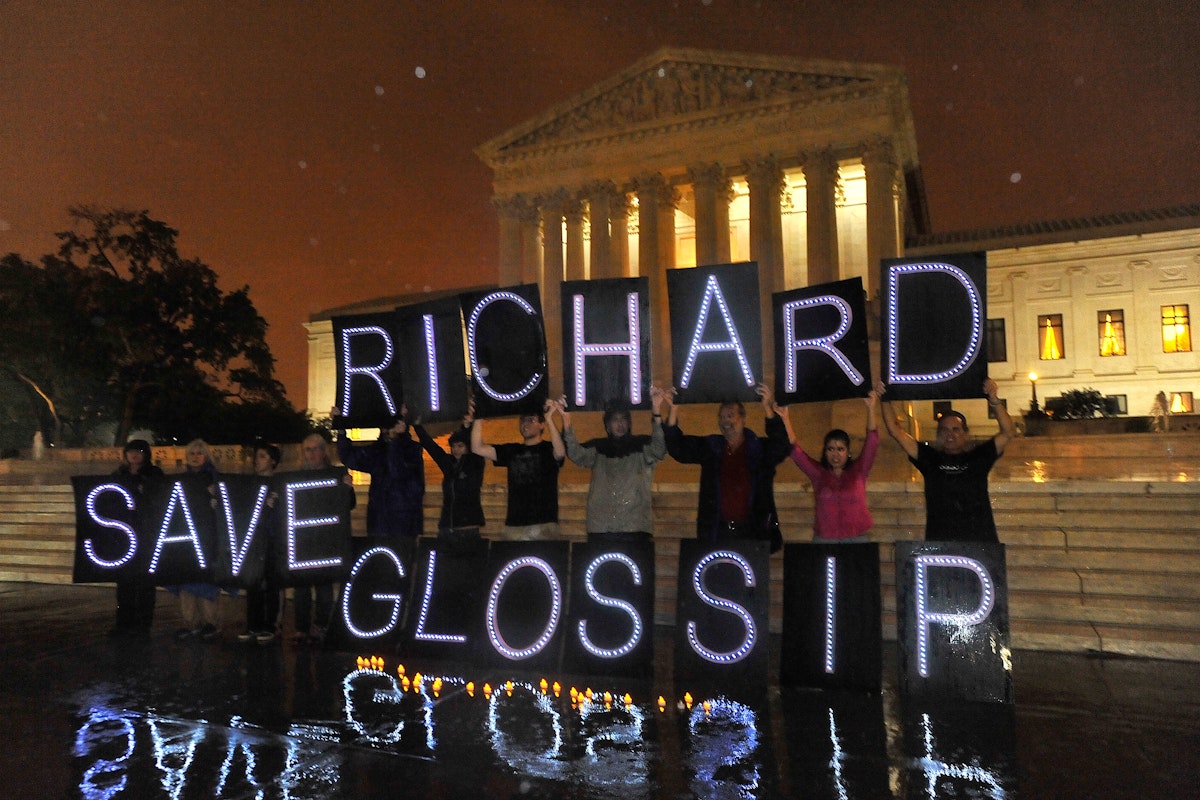
Over the years that followed, Glossip filed multiple challenges to his conviction in state and federal courts. None were successful. The OCCA upheld his second conviction in 2007 by a narrow 3–2 margin. In the mid-2010s, Glossip joined a group of fellow death row inmates who challenged Oklahoma’s use of the sedative midazolam, which had been linked to botched executions across the country, in its lethal injection protocol. Glossip ultimately became the named plaintiff in Glossip v. Gross, the Supreme Court case in 2015 where the justices rejected an Eighth Amendment challenge to execution methods.
Glossip’s modest role in that legal battle drew more attention to the circumstances of his own death sentence. Segura and Smith began covering the weaknesses in the prosecution’s case that year; documentary filmmakers and local activists pressured the state to review it further. In 2021, a bipartisan group of state lawmakers hired the law firm Reed Smith to conduct an independent investigation of Glossip’s case. The firm’s report in 2022 said it had found multiple flaws that gave it “grave doubt” about the integrity of Glossip’s second conviction: destroyed evidence, misleading portrayals of Sneed’s actions by prosecutors to the jury, and unreliable testimony from a former police officer who was later convicted of making false statements.
Shortly after the report came out, state officials released multiple boxes of previously undisclosed case documents to Glossip’s lawyers. Among the documents was a 2003 letter from Sneed to his lawyer, where he asked, “Do I have the choice of recanting my testimony at any time during my life,” and is “there … anything you know, on [Glossip’s] court date and about re-canting.” Prosecutors then disclosed another box of trial documents that included, among other things, handwritten pretrial notes of Connie Smothermon, the lead prosecutor at the time. Smothermon wrote that Sneed had actually been prescribed lithium by the jail psychiatrist after he diagnosed Sneed with bipolar disorder, contradicting Sneed’s own testimony.