
What does USAID spend money on? List of potential cuts

The future of the U.S. Agency for International Development (USAID) is in jeopardy due to cost-cutting measures proposed by former President Donald Trump and billionaire Elon Musk. Employees have been locked out, and the Trump administration is moving to merge USAID with the State Department, raising concerns about its ability to operate independently.
Why It Matters
For decades, USAID has played a crucial role in global development, managing over $40 billion annually for programs that combat HIV, malaria, and tuberculosis, provide disaster relief, improve access to clean water, and support economic development in struggling nations.
However, Trump and Musk, who now leads the newly created Department of Government Efficiency (DOGE), see many of these expenditures as "excessive" and "unnecessary." As part of their broader effort to shrink the federal government, they are pushing for deep budget cuts, arguing that USAID's funding includes wasteful spending that should be eliminated.
What Is USAID?
USAID is the U.S. government's primary foreign aid agency, responsible for directing billions of dollars in humanitarian assistance, economic development, and health initiatives worldwide. The agency operates in over 100 countries, supporting programs in disaster relief, economic growth, health care, democracy promotion, and food security.
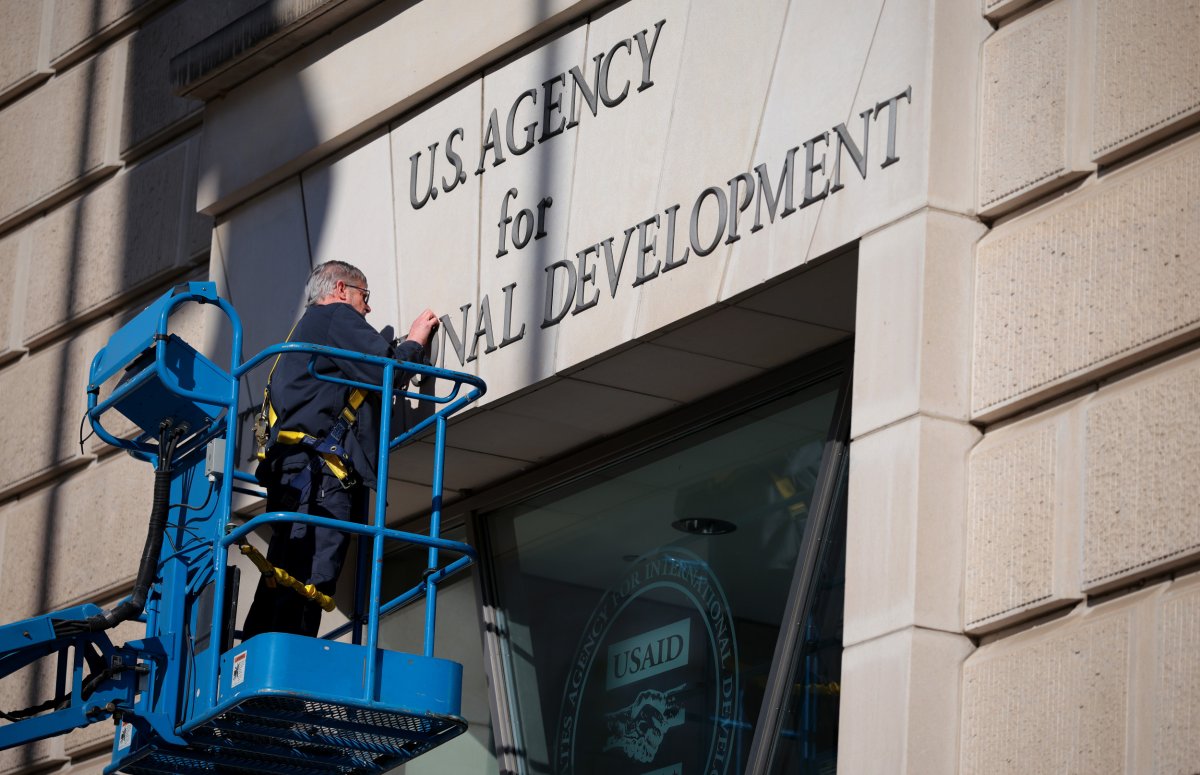
Its mission is to "promote global stability and prosperity" by tackling challenges such as poverty, disease, and political instability. USAID often works in partnership with foreign governments, nonprofits, and private-sector organizations to implement its programs.
The agency also plays a significant role in U.S. foreign policy, often serving as a "soft power" tool to strengthen relationships with allied nations, counter extremist influence, and enhance global security.
How Was USAID Created?
USAID was established in 1961 by President John F. Kennedy as part of an effort to formalize and expand U.S. foreign aid programs. Before USAID, American international assistance was scattered across multiple agencies, making coordination difficult.
Kennedy created USAID at the height of the Cold War, seeking a more efficient way to counter Soviet influence abroad through foreign assistance. He viewed the State Department as too bureaucratic to manage this effort effectively.
Congress passed the Foreign Assistance Act, and Kennedy established USAID as an independent agency in 1961. While the Soviet Union collapsed in 1991, USAID continued to counter Russian and Chinese influence globally. China's Belt and Road Initiative, for example, is seen as a competing foreign aid program.
Critics argue that USAID's programs are wasteful and promote a liberal agenda, while supporters say they advance U.S. interests by fostering stability and alliances abroad.
How USAID Spends Its Budget
The U.S. allocated roughly $40 billion to foreign aid in the 2023 fiscal year, according to a report last month by the nonpartisan Congressional Research Service. While the U.S. is the world's largest provider of humanitarian assistance, foreign aid accounts for less than 1 percent of the federal budget. In 2024, USAID comprised just 0.3 percent of total federal spending—down from 0.5 percent in 1980. Over the past decade, this share has remained stable.
USAID Spending by Sector:
- $16.8 billion – Governance
- $10.5 billion – Humanitarian assistance
- $7.0 billion – Health
- $3.5 billion – Administrative expenses
- $1.6 billion – Other programs
- $1.3 billion – Agriculture
- $1.1 billion – Education
- $1.0 billion – Infrastructure
- $0.7 billion – Economic growth
Regional Distribution:
A significant portion of USAID's funding went to Europe and Eurasia, primarily to support Ukraine's war effort and reconstruction.
- $17.2 billion – Europe and Eurasia (mostly Ukraine)
- $12.1 billion – Sub-Saharan Africa
- $5.5 billion – Multiple regions
- $3.9 billion – Middle East and North Africa
- $1.9 billion – South and Central Asia
- $1.8 billion – Western Hemisphere
- $1.1 billion – East Asia and Oceania
Top Recipients of USAID Funding:
USAID provided assistance to about 130 countries in FY2023. The top 10 recipients were:
- Ukraine
- Ethiopia
- Jordan
- Democratic Republic of Congo
- Somalia
- Yemen
- Afghanistan
- Nigeria
- South Sudan
- Syria
Seventy of the 77 low- and lower-middle-income countries designated by the World Bank received assistance in FY2023, reflecting USAID's focus on poverty reduction.
Cuts to USAID's Budget
Under recent budget proposals, USAID could face billions in cuts, significantly reducing its ability to provide foreign aid. Trump and Musk have been vocal about their belief that USAID should be eliminated entirely.
Sub-Saharan Africa could be the most affected, as the region received more than $6.5 billion in humanitarian assistance last year. HIV patients in Africa seeking treatment at clinics funded by a renowned U.S. program that helped curb the global AIDS epidemic in the 1980s have found their doors locked.
USAID also supports governance and media projects in countries where Russia exerts influence, such as Georgia and Armenia.
In Latin America, the impact is already evident. A busy migrant shelter in southern Mexico has lost its doctor. A mental health program for LGBTQ+ youth fleeing Venezuela has been disbanded. In Colombia, Costa Rica, Ecuador, and Guatemala, so-called "Safe Mobility Offices," where migrants could apply to enter the U.S. legally, have shuttered.
Some Misleading Facts
White House press secretary Karoline Leavitt, explaining Trump's decision to halt USAID, claimed the agency had spent:
- $1.5 million to advance DEI in Serbian workplaces
- $70,000 for a DEI musical in Ireland
- $47,000 for a transgender opera in Colombia
- $32,000 for a transgender comic book in Peru
These claims went viral on social media. However, only the grant to a Serbian organization called Grupa Izadji was awarded by USAID. The rest were funded by the State Department's Office of the Under Secretary for Public Diplomacy and Public Affairs.
Why Do Some Think USAID's Spending is Wasteful?
Americans have long held mixed views on foreign assistance.
While USAID's mission is to promote global stability and economic development, critics argue that the agency's spending is inefficient, poorly managed, or unnecessary.
A March 2023 AP-NORC poll found that about 6 in 10 U.S. adults believed the U.S. government was spending "too much" on foreign aid.
When asked about specific costs, roughly 7 in 10 said too much money was going to international assistance. Among Republicans, nearly 9 in 10 agreed, while 55 percent of Democrats shared the concern.
Some policymakers and analysts believe that billions of dollars in foreign aid could be better spent on domestic priorities or that USAID's programs fail to achieve meaningful, long-term results.
However, polling has also shown that Americans overestimate foreign aid spending. Surveys from KFF found that on average, Americans believe foreign aid comprises 31 percent of the federal budget, when in reality, it is closer to 1 percent or less.
Could Trump Dissolve USAID on His Own?
Democrats argue that a president lacks the constitutional authority to eliminate USAID. However, it remains unclear what legal mechanisms could prevent Trump from trying.
A similar legal battle played out during his first term when he attempted to cut the foreign aid budget by a third. When Congress refused, the Trump administration froze funds and used other tactics to limit spending already appropriated by Congress. The Government Accountability Office later ruled that these actions violated the Impoundment Control Act.
The future of USAID remains uncertain, with its fate likely dependent on upcoming political and legal battles.


